

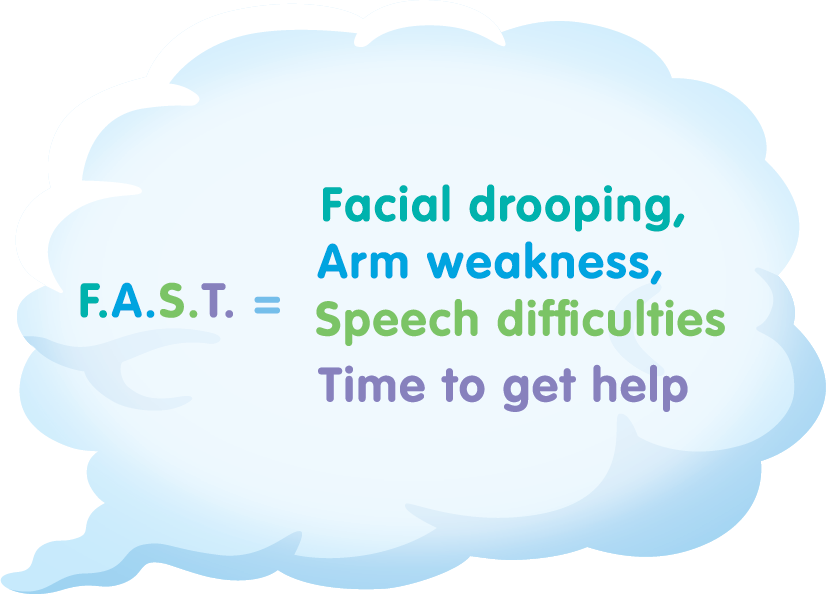
治療急性缺血性中風是分秒必爭!因為每1分鐘腦部缺血,便有約200萬腦細胞死亡。一旦發現疑似中風症狀,盡快致電999,把握病發後3至4.5小時的治療黃金時間。患者往往因不同需要,需使用不同的急性治療,以減低病情惡化及再次中風的機會。
Treating acute ischemic stroke is a race against time. An estimated 2 million neurons die every minute the brain lacks blood supply following a stroke. Once stroke is suspected, it is crucial to call 999 (in Hong Kong) immediately. This gives the individual the best chance to receive appropriate treatment within the 3 to 4.5 hour time-window from symptom onset. Depending on the type and severity of stroke, patients may require different forms of acute treatment to minimize the chance of deterioration and prevent stroke recurrence.
急性缺血性中風治療
Treatment for hyperacute ischemic stroke

溶栓藥物治療
部分急性缺血性中風患者可接受溶栓藥物治療,溶解血栓中聚集的纖維素,有機會疏通被堵塞的腦血管,但必須於發病後3至4.5小時內及早使用。接受治療後,需要接受密切觀察並控制血壓,以減低轉變成出血性中風的風險。越早接受治療,康復機會越高。
Thrombolytic therapy
Thrombolytic therapy can be considered in some patients with hyperacute ischemic stroke. It works by dissolving the fibrin within blood clots, which can potentially unclog the occluded blood vessel and reestablish blood flow to brain tissues. However, it has to be given within 3 to 4.5 hours from symptom onset. Following thrombolytic therapy, patients must be closely monitored with strict blood pressure control to minimize the risk of hemorrhagic transformation. The earlier treatment is received, the higher the chance of good recovery.
血管介入機械取栓術
如果病情和時間適合,部分患有缺血性中風並且顱內有大血管閉塞的患者,可接受血管介入機械取栓術,增加功能復原的機會。
Mechanical thrombectomy
Mechanical thrombectomy may be considered in some patients with hyperacute ischemic stroke who have large vessel occlusion. This increases the chance of recovery from a major stroke.
缺血性中風後的預防性藥物治療
Preventive medications for ischemic stroke

血小板抗集結劑(如亞士匹靈)
可預防血小板凝成血塊,減低再次發生缺血性中風的風險。
Anti-platelets: e.g. Aspirin
Work by inhibiting platelet congregation, lowering the chance of blood clot formation and the risk of recurrent ischemic stroke.

抗凝血藥物(如華法林或新一代口服抗凝血劑)
只適合心房顫動病人使用。這類藥物能減低在心臟形成血栓的風險,大大減低腦栓塞和缺血性中風的機會。
Anticoagulants: e.g. Warfarin and Novel Oral Anticoagulants
Suitable for patients with atrial fibrillation only. They reduce the chance of blood clot formation within the heart, and significantly lower the risk of ischemic stroke due to embolism.

血壓藥、降膽固醇藥及糖尿藥
透過控制中風風險因素減低病情惡化及再中風的機會。
Antihypertensives, lipid-lowering drugs and antidiabetic medications
Through good control of vascular risk factors, these medications help lower the chance of disease progression and stroke recurrence.
急性出血性中風治療
Treatment for acute hemorrhagic stroke
如患者確診為急性出血性中風,採用的治療方案與急性缺血性中風有所不同,包括以下方法:
Treatment for acute hemorrhagic stroke differs from that of acute ischemic stroke, and includes the following:
血壓藥
可穩定血壓及病情。
Antihypertensives
Work by keeping blood pressure under control to stabilize patient’s condition.

外科手術
視乎出血的程度、位置、有否併發腦水腫及病人整體情況等,部分患者可能需要接受外科手術移走血塊以減低顱內壓。
Surgery
Depending on the size and location of the hematoma; the presence of complications such as brain swelling; and the overall condition of the patient, surgical removal of the hematoma to relieve intracranial pressure may be considered in some cases.

References:
- Hospital Authority Smart Patient. Disease Management – Stroke. Accessed on Sep 19, 2023.
- HKU Stroke. 中風到康復的過程 | 急性入院篇. Accessed on Sep 19, 2023.
- HKU Stroke. 中風到康復的過程 | 住院治療篇. Accessed on Sep 19, 2023.
